

Interview: Lee Robinson from BBC One's The Marvellous Miniature Workshop
BBC One’s The Marvellous Miniature Workshop is introducing miniature model-making to thousands, and for many, for the first time. Presented by Sara Cox, each episode sees guests of the show marvel at miniature scenes that re-capture important and fond memories from their past, each one beautifully brought to life by a talented model-maker.
Keen to learn about his model-making background and starring role in the cast of four model-makers for the show, Howard Smith speaks with Lee Robinson of LNR Models...
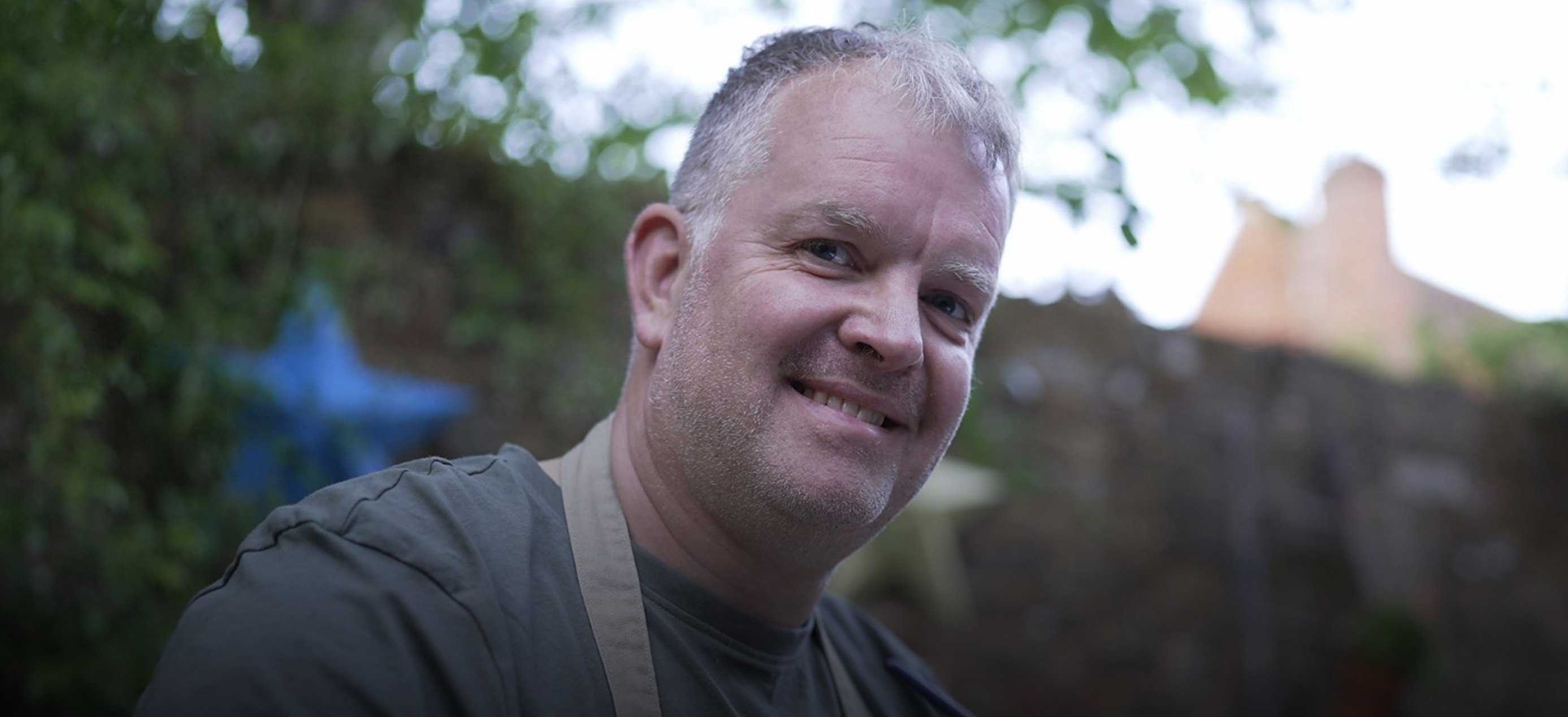
Howard: What first inspired you to start making miniature models? Can you recall the first model you built?
Lee: It all started as an idea to try and make some scenery and buildings for my children's trainset – just something to dress the layout. The more I researched and drew off my graphic designer background to recreate buildings in a similar vein to the excellent Scalescenes models (of which I built a few), the more I wanted to make more realistic buildings.
I started to investigate scratch building and discovered the work of Iain Robinson – a wonderful model-maker and contemporary of Allan Downes. He became a mentor, and we exchanged emails and comments on his now-deactivated blog many times. The first scratch-built model I made was a signal box based on a plan of Iain's. I still have it, but it's been knocked off a shelf and is a little worse for wear now.
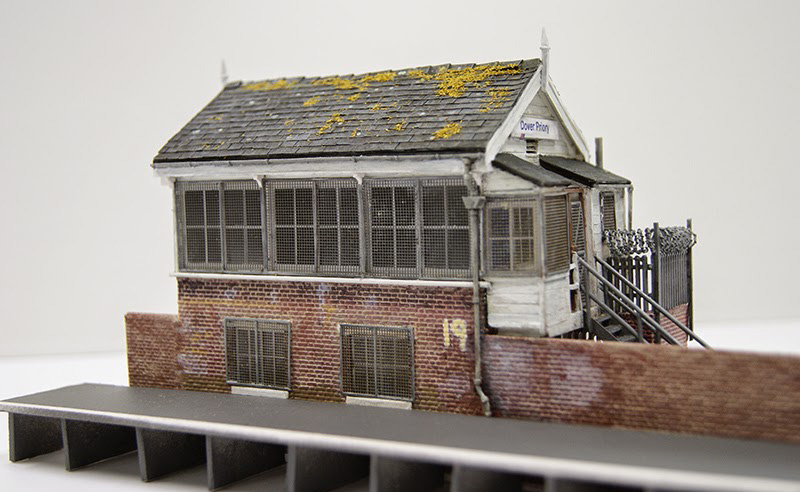
Dover Priory's signal box beautifully captured by Lee in its sad-looking present-day state. In dire need of a clean and repaint, high-security wire mesh covers all apertures as anti-vandal fencing – akin to something surrounding a prison! – guards access from the road.
H: When did you realise your model-making had the potential to scale into a business?
L: I'd made a few models for people I'd met on the model railway forums as my first foray into the commission world. In 2020 I'd just finished a collection of models for a customer, recreating the lost railway buildings of Denholme Station near Bradford. I took a picture of a model house I'd made for myself and posted it on Twitter asking, 'Would anyone like a model of their own home?'
I was inundated with replies and not to sound corny, I haven't stopped since. Of course, it was a bit of a perfect storm – many people were at home, and I was in my naivety, making models for far less than I charge now, but I had a long waiting list from the start.
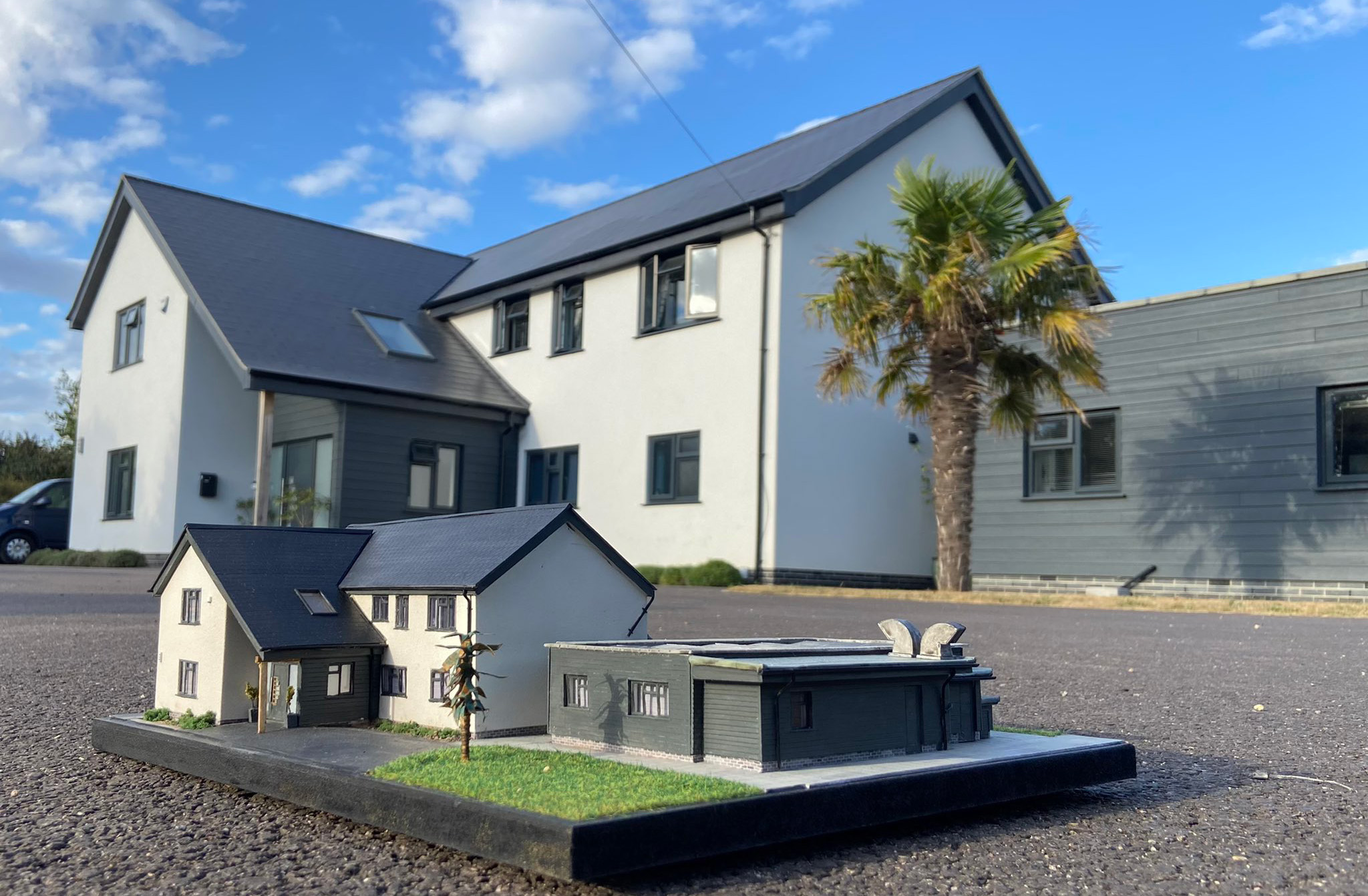
It's in architectural model-making that Lee developed his business, creating miniatures for home-owners around the world.
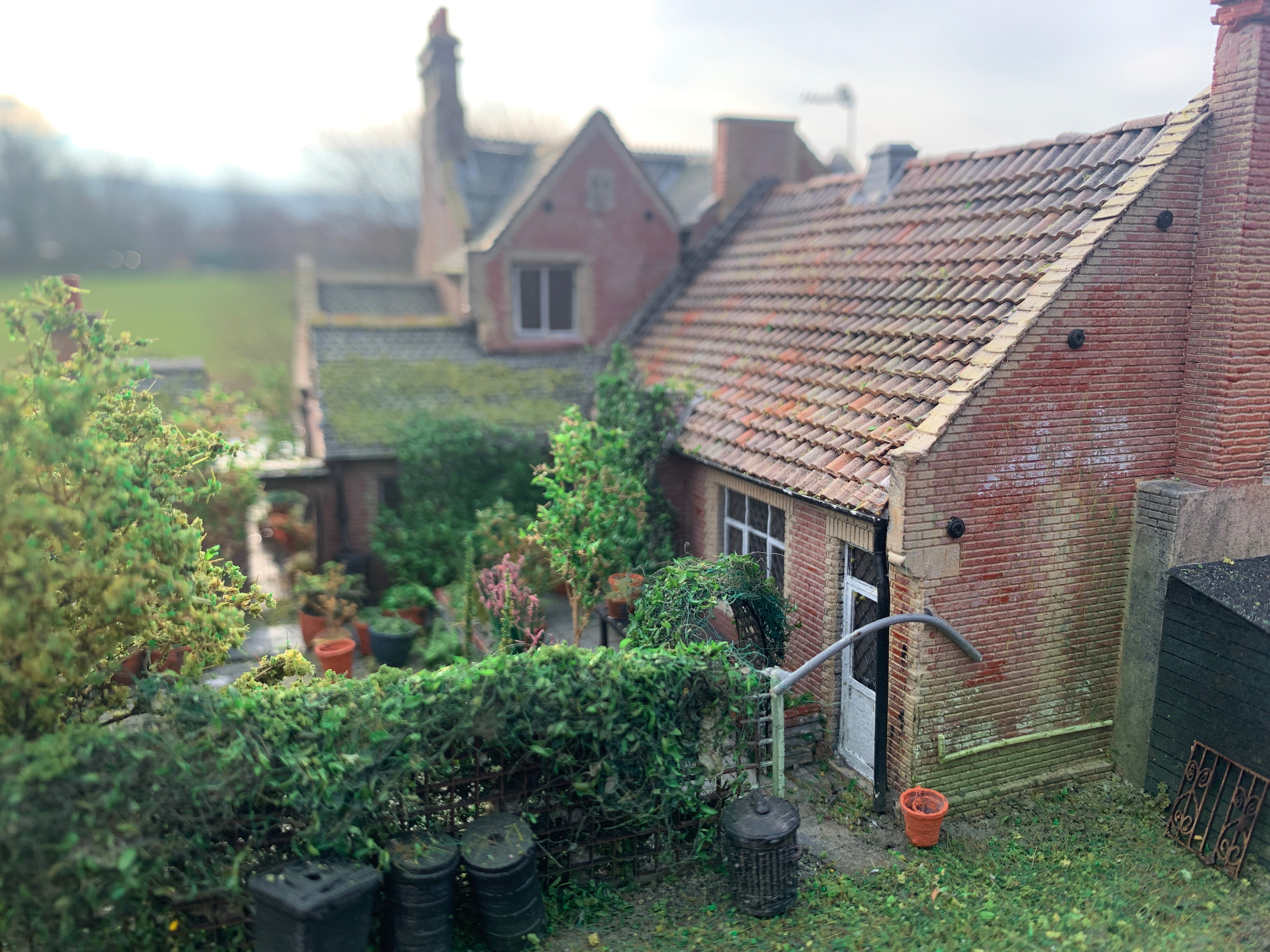
Specialising in miniature gardens comes with the territory of residential model-making. Here an old school house is recreated with a garden made for 'pottering about'...
H: What materials and techniques have become your signature over the years? Have they required any development?
I: Originally, my 'go-to' material was Foamex – brilliant for carving stone walls and I'd say that was my original signature, but I'm always developing and exploring techniques.
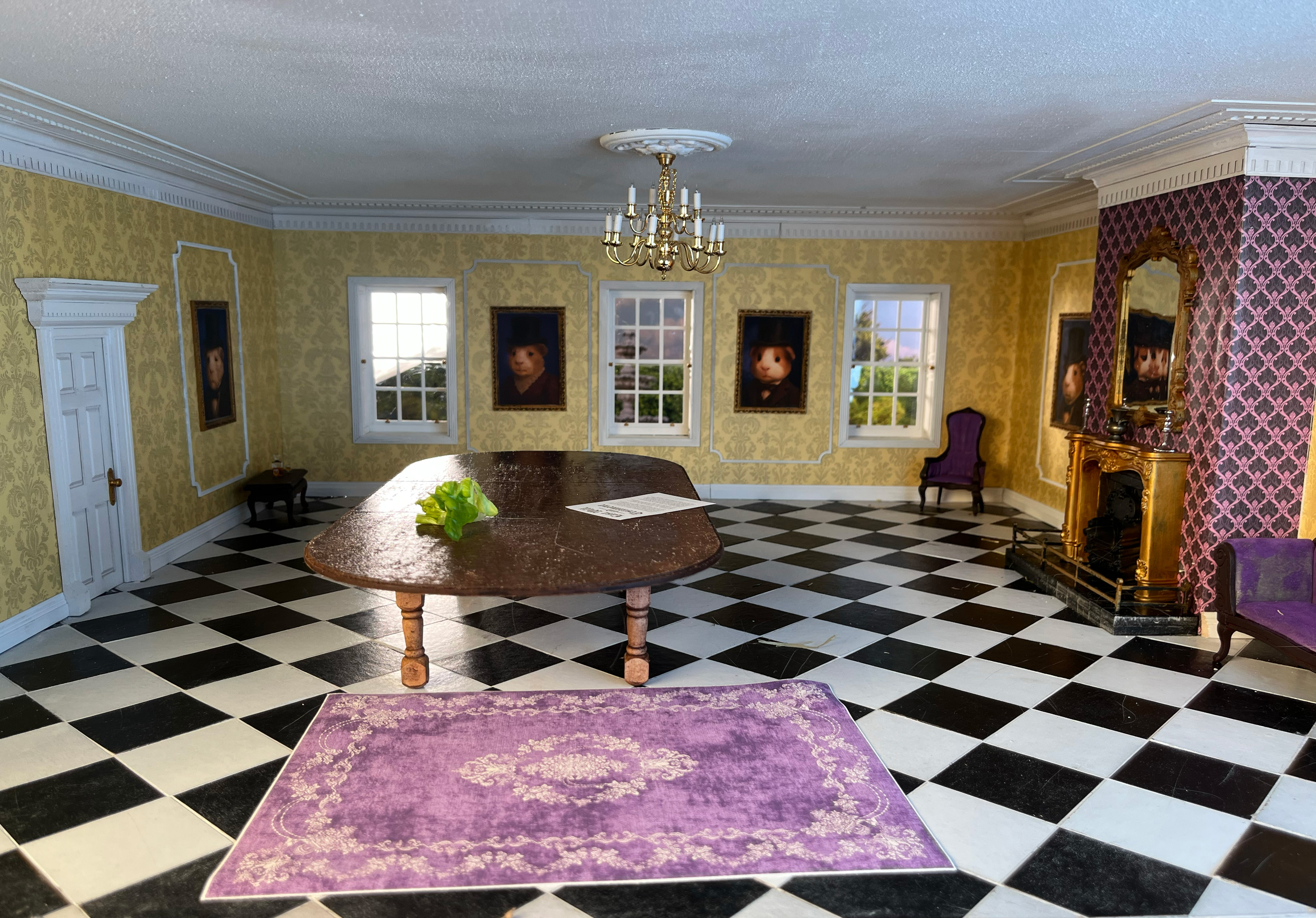
Working in larger scales affords greater detail – the interior of this house has us intrigued. The wallpaper is... 'jazzy'!
H: You always seek life-like scale details in your buildings — what’s your process for capturing textures such as stonework and brick?
I: Stonework can be captured by carving and texturing Foamex and air-drying clay. Whilst XPS foam is good for larger scale modelling, it's too coarse to capture the details for smaller scales. For brick, I find laser etching the brickwork to be far more accurate and detailed than proprietary moulded sheets. Care must be taken to disguise the MDF though, so careful painting with acrylics and oil washes to give that age worn look is very important.
H: Which types of commissions do you enjoy most — historic buildings, personal favourite landmarks, railway structures, or something else entirely?
I: I like something that has an emotional attachment and has a lot of history. I'll always have a love for the railway structures though, especially stone.
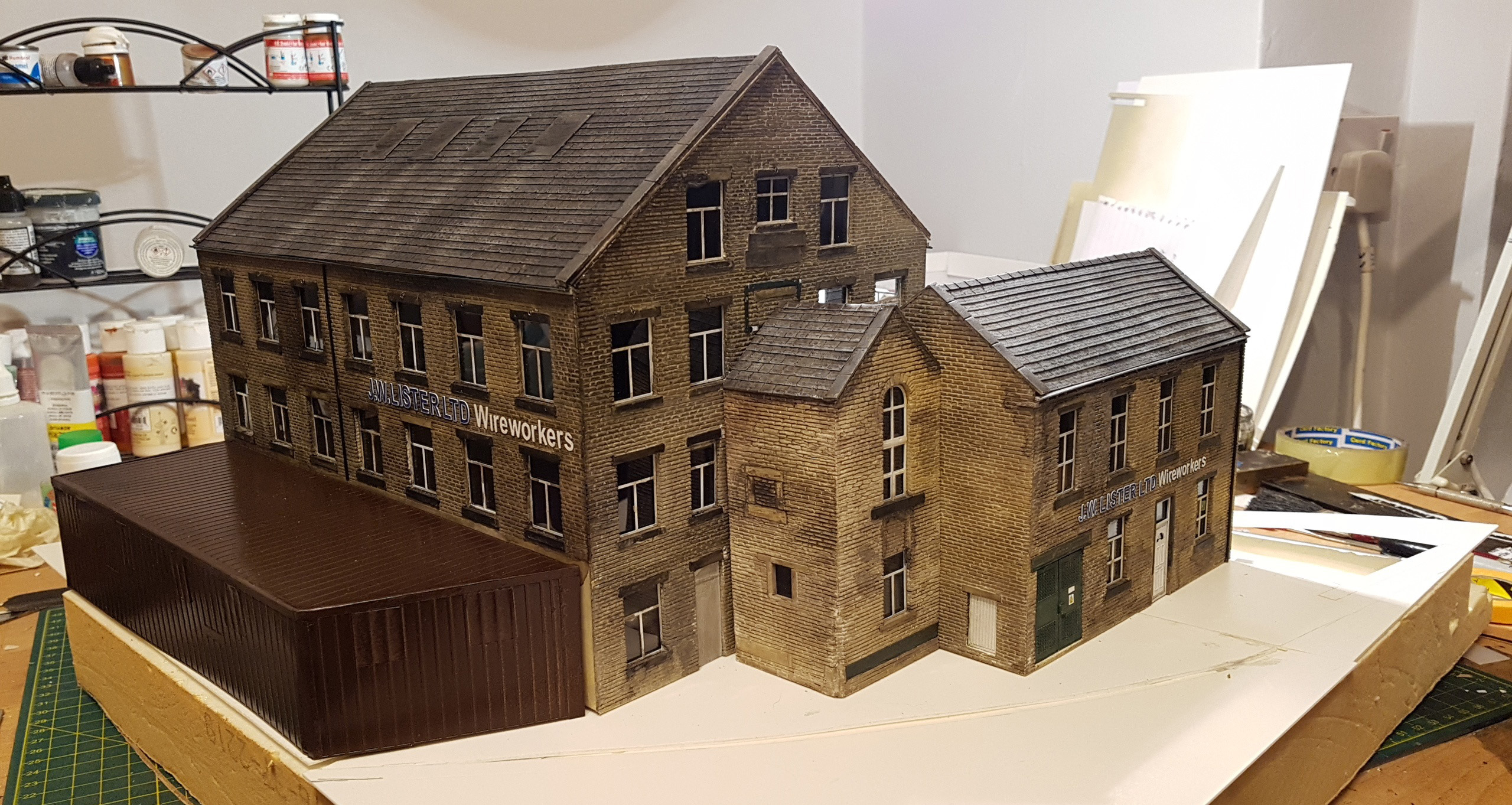
Stone mills evocative of the North West aren't out of Lee's comfort zone, either. Here, J. W. Lister Ltd Wireworkers is modelled with typical weathering in-keeping with the portrayed age of the buildings.
H: What’s the most challenging miniature you’ve been tasked with creating? What made it so demanding?
I: I think it was a small French Château. It had lots of intricate details but also backed straight onto a narrow street which meant some elevations were very hard to understand through photographs. I agonised over the drawing of that project for weeks, but it turned out great in the end.
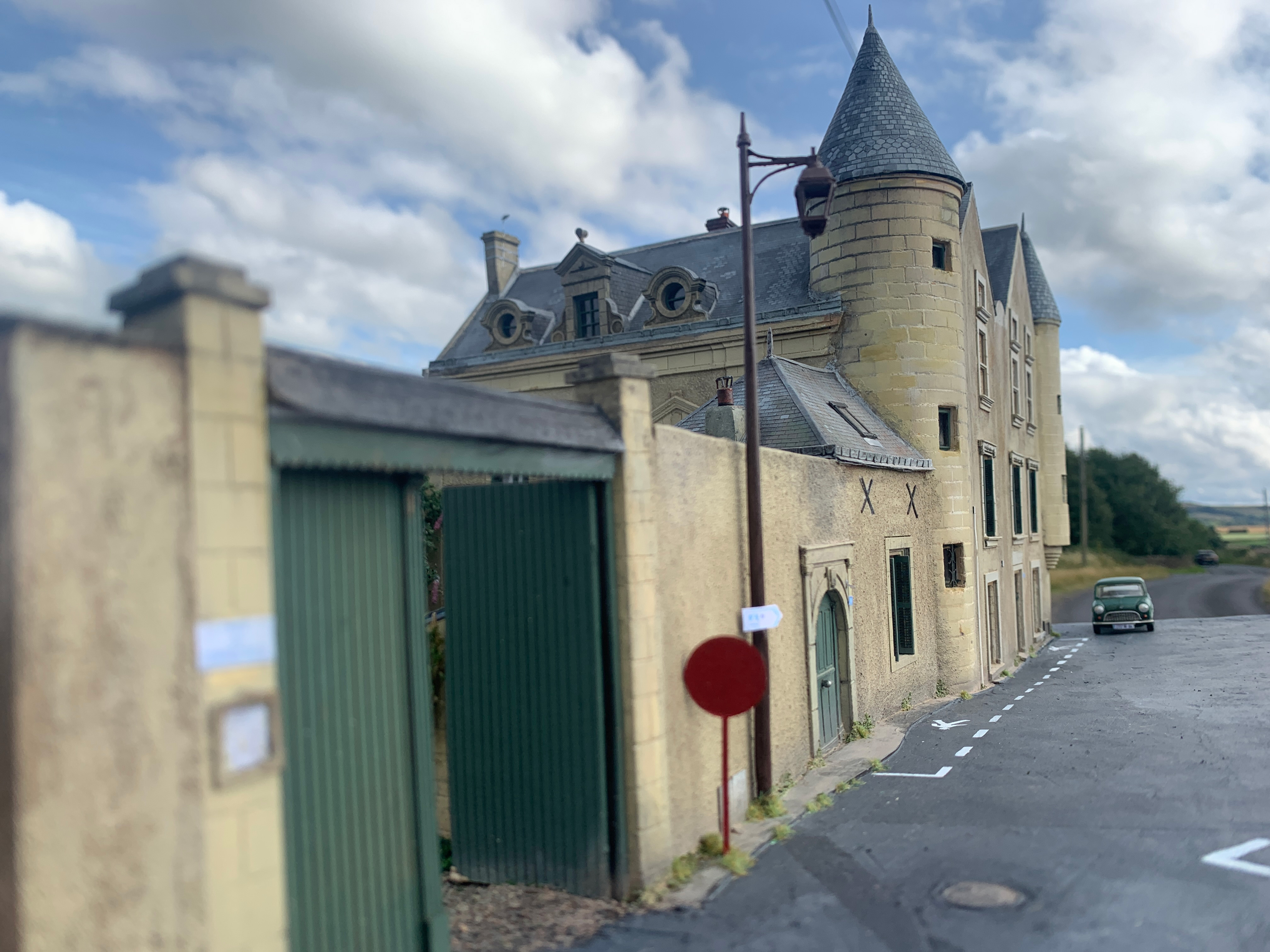
Outdoor photography of Lee's miniatures offers great imagery, as here with his French Château build. The slate roof and ornate round loft windows are so typical of many majestic buildings in the country...
H: Is there a dream structure or scene you hope to recreate one day, either for yourself or as a commission?
I: My dream structure is to build a castle or a stone keep. I'm absolutely in love with stone...
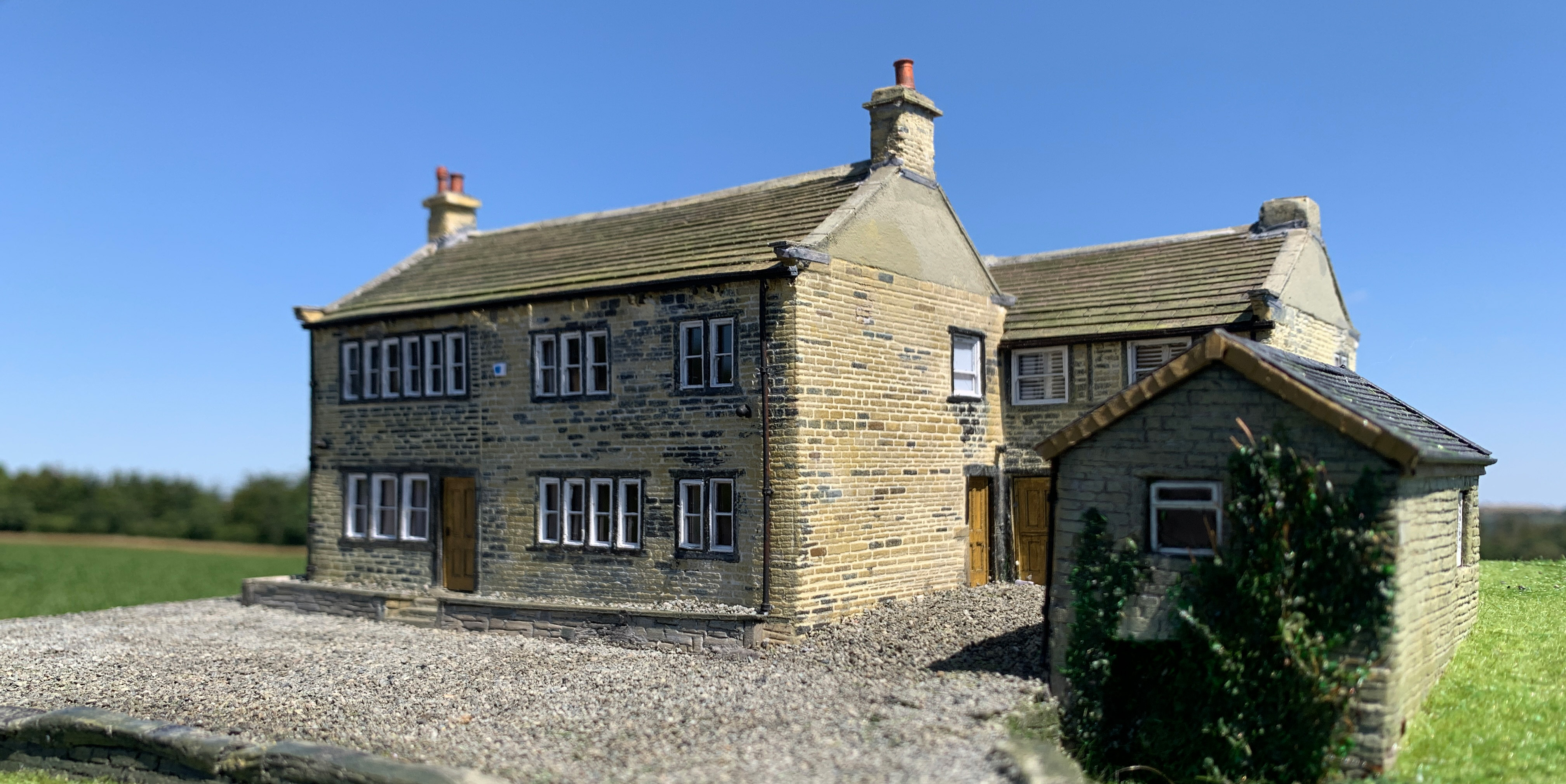
A stone keep might be Lee's miniature dream build, but a stone-built Yorkshire farmhouse will have to do for now... Cement-rendered gable walls and small imperfections add great character.
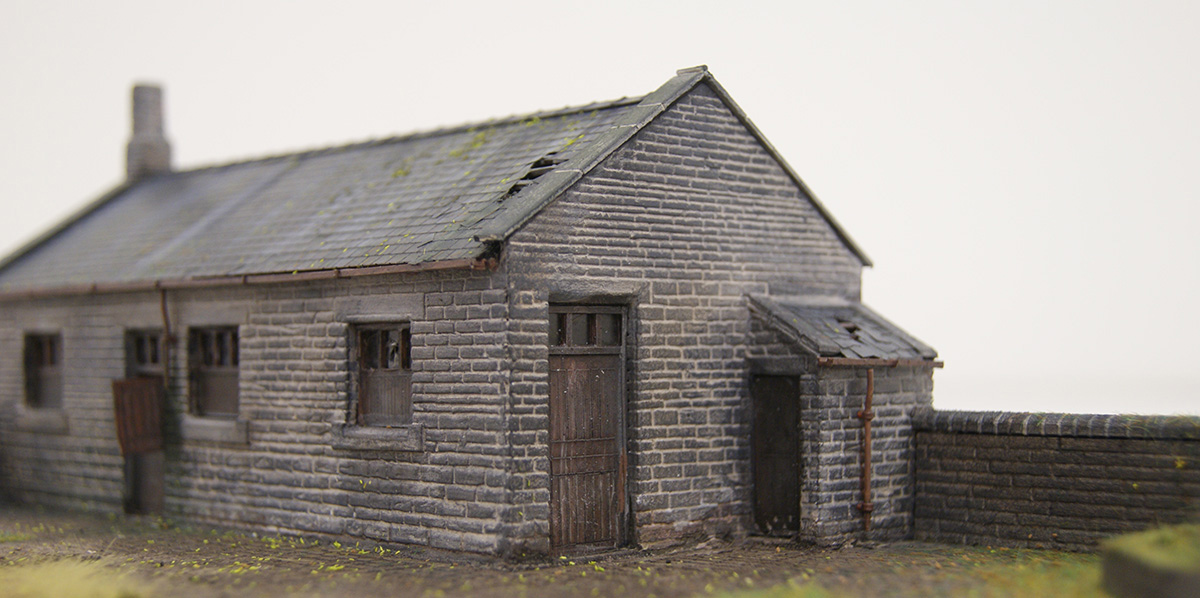
Derelict stables – another of Lee's creations. Broken slate roofs are captured with wonderful artistry.
Looking for modelling tools, modelling consumables and materials for scratch-building model architecture just like Lee? Browse everything in store at TMC with fast delivery.
H: How did you first become involved with The Marvellous Miniature Workshop?
I: I was first approached over a year ago by a commissioning producer who had found me through my website and social media presence. She wanted to discuss the concept of the show and my thoughts. A few months later I was told the show had been 'green lit' and they'd like to interview me over video call. Following this I was cast as one of the team of miniaturists.
H: What was your reaction when you were asked to join the team?
I: I was over the moon to be cast. It's a great honour to be chosen out of the many model-makers and miniaturists in the country. Having a chance to showcase my work to the nation was a great opportunity. The very concept of the show has been exactly what the focus of my model-making has been for the last five years – bringing people's cherished buildings to life in miniature. I was excited to find out who else I would be working with, too.
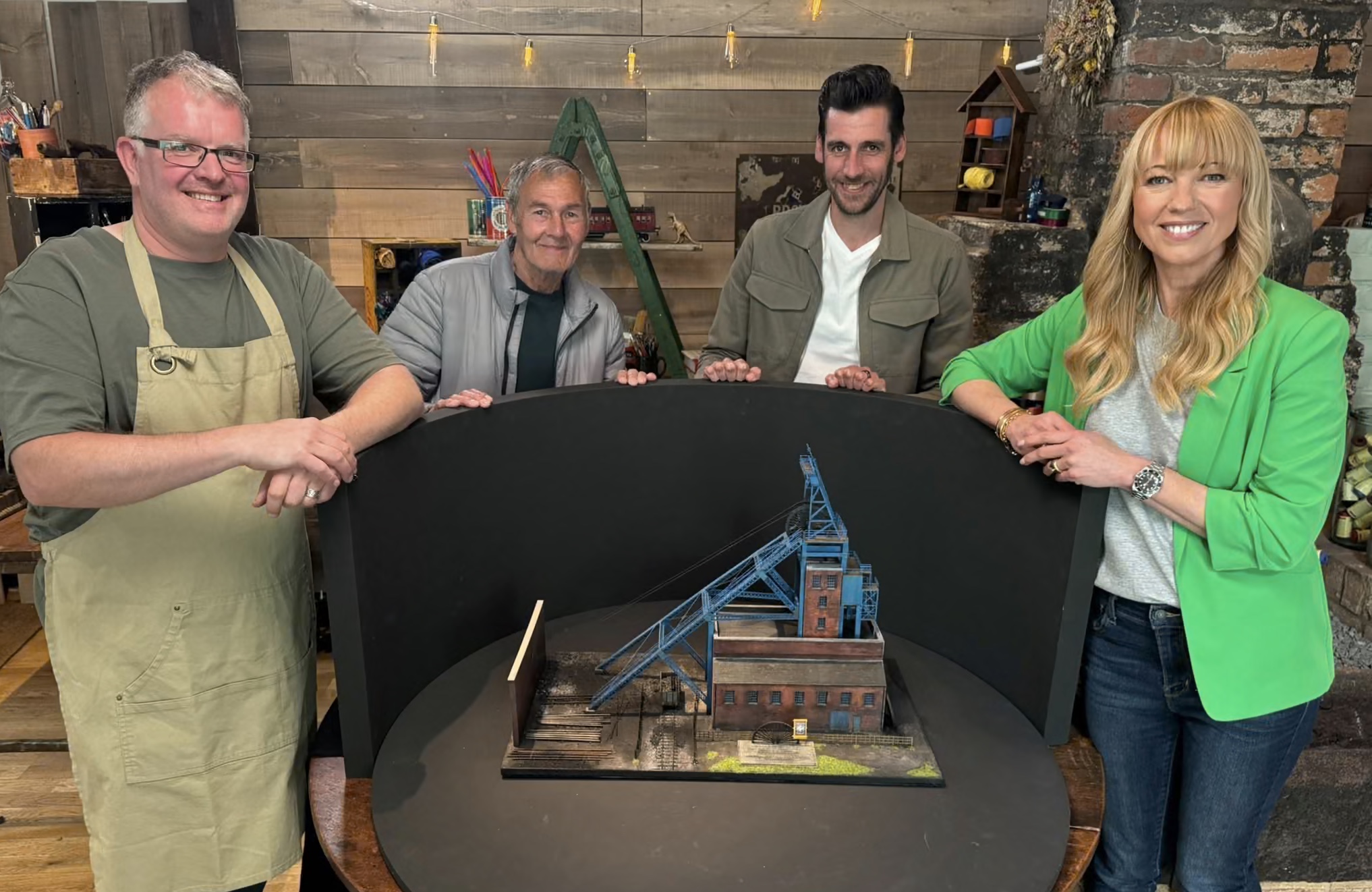
Lee (left) appears in episodes three and eight, alongside fellow model-making cast members Hannah Lemon, Abi Trotman, and Ethan Goodbody. Episode three sees him build this model of Silverwood Colliery for Reg and Neil (centre).
H: Your build in episode three sees the recreation of Silverwood Colliery. What was the most meaningful part of building such an emotionally significant place for Reg and Neil?
I: I'm not going to lie – the task of recreating it was daunting. It was such a huge site and was very significant to the people of Rotherham. I knew I had to make something that resonated, and it had to look like the place many people remembered. It had to look real. After the interview with Reg, I could see just how much the place meant to him, so I knew I had to put something personal into the build.
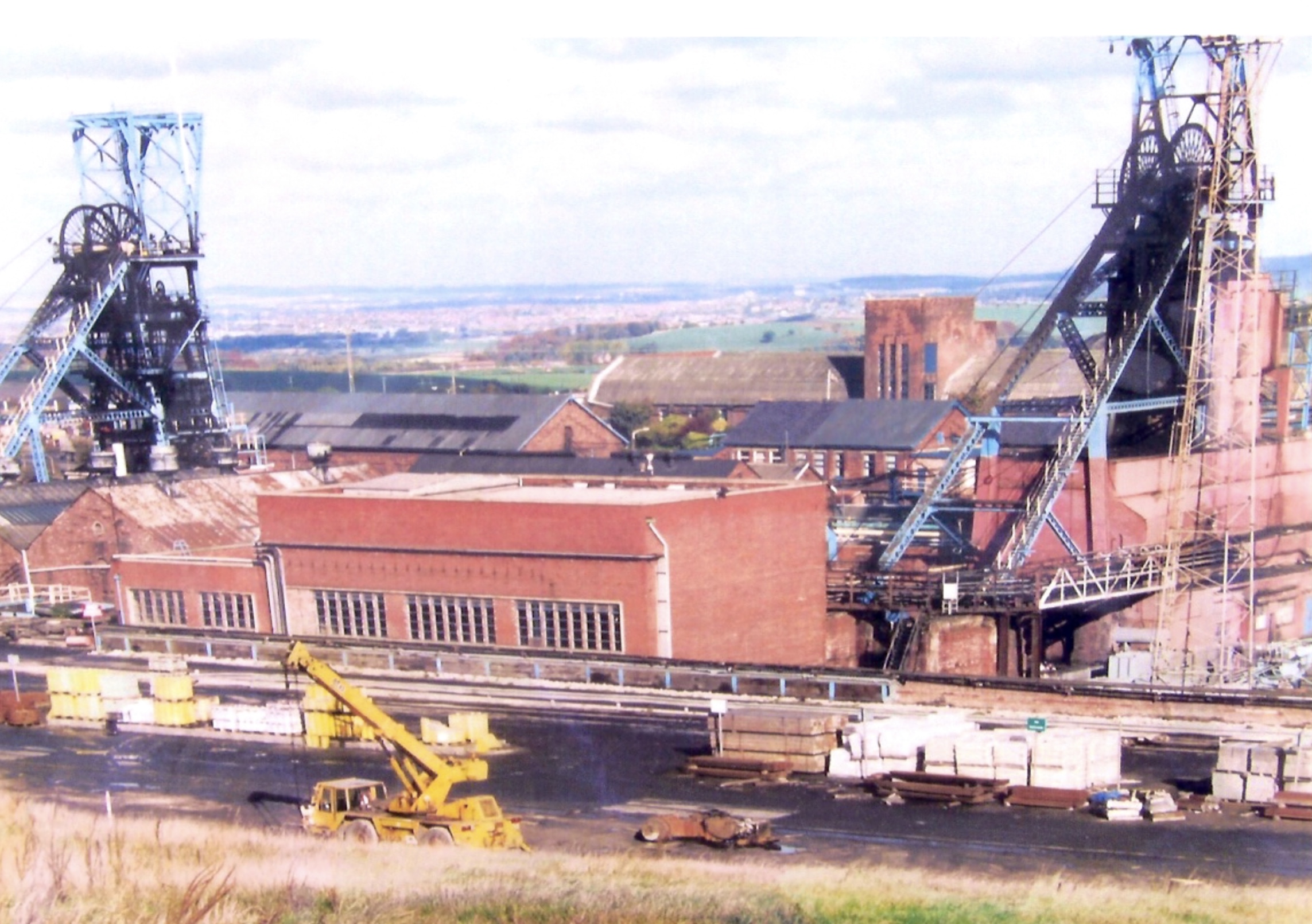
Silverwood Colliery was a coal mine in South Yorkshire that closed in 1994. The former site is now a public woodland with trails and a nature reserve. Lee was tasked with making a model for former miner, Reg.
H: How did you approach researching and gathering reference material for the colliery model, especially given its historical importance?
I: We were all given reference material that the research team had been given by the show's contributors Reg and Neil. Part of my own process, especially with historical buildings, is to gather as much information as I can.
I trawled the internet to find better photographs and came across an archive of black and white photographs from the early 1980s which were quite clear in showing the winding gear. There is a little artistic license in building the winding tower as most photographs aren't clear and the site changed a lot through its history. I wanted to evoke the spirit of the place from when Reg worked there.
H: Were there any techniques or details in that build that pushed your skills in new directions?
I: I've been using a laser cutter as a precision cutting tool for quite a while now. The trusswork gave me a new challenge in critical thinking. I work in 2D, so had to plan the build very carefully to make the girders three-dimensional. I'd build the winding wheel differently now, but that gave me impetus to push myself to create details more accurately.
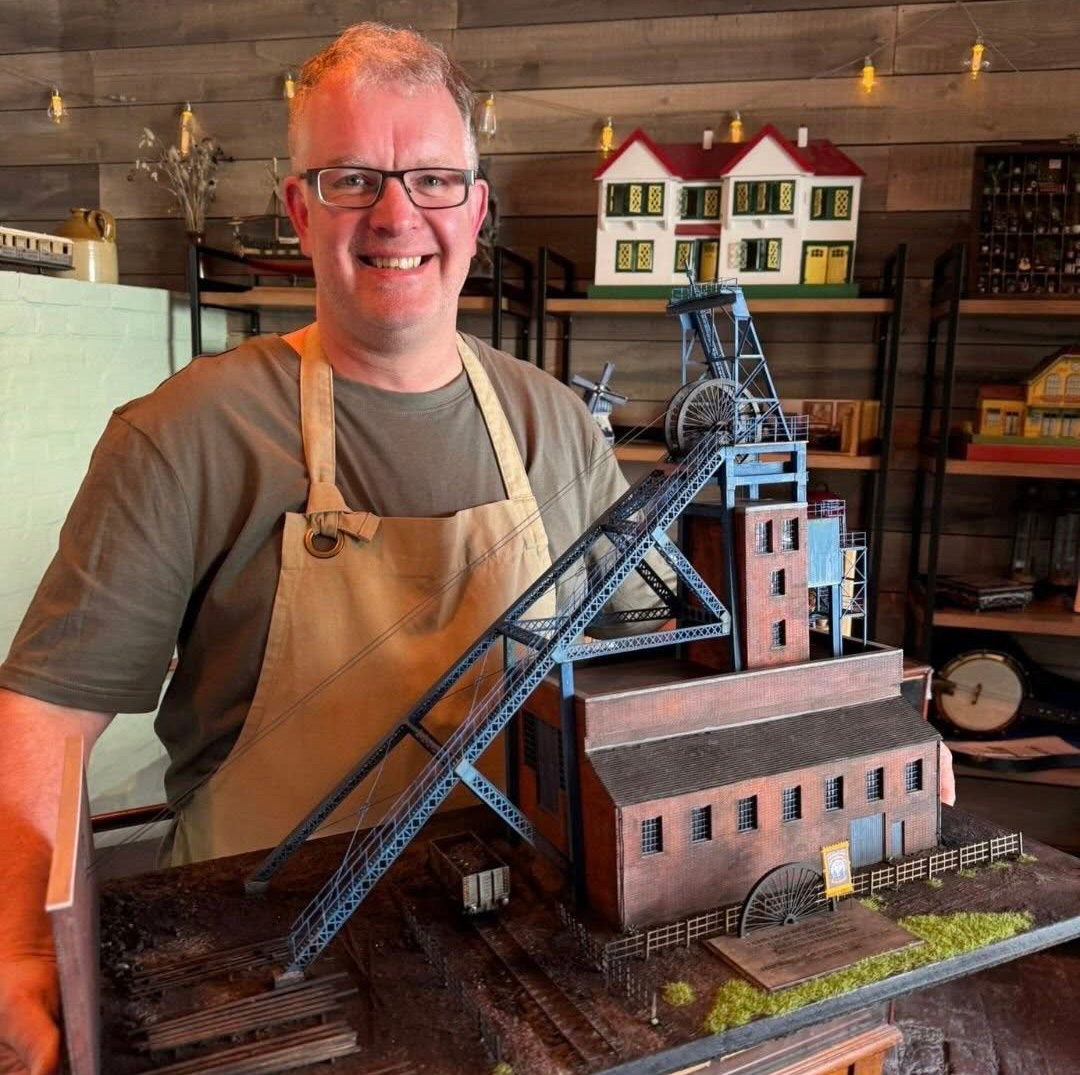
Lee's use of Computer Aided Design (CAD) and a laser-cutter allowed him to recreate the lattice girders of Silverwood's winding gear with pinpoint accuracy.
H: What was it like working alongside other model-makers and sharing the craft you love on a national platform?
I: I already knew two of the other miniaturists from social media, and we became good friends on WhatsApp. Sharing our journey and then meeting on set was like old friends meeting. We shared ideas, techniques and even materials and equipment. We really were a tight team. We worked hard, but were quite giddy about the whole experience.
H: Did building for the episodes differ from your usual workflow — were there time pressures or creative constraints you hadn’t experienced before?
I: I would say it wasn't that different. We did have a lot of pressure to complete on time, but unlike the challenge shows, we were given good time to produce our best work. I think given that we knew it would be displayed on national TV, we pulled out the stops to make sure it was our best work. Of course, we are all our worst critics and there are things I wished I'd done differently.
H: What do you hope viewers take away from your episodes and from miniature-making as an art form?
I: I hope people are inspired to give it a try themselves. I know many people wanted to see more model-making, but the show was designed to appeal to a broad demographic. If people want to see more, I live stream my processes on social media, so they can come and seek me out. Indeed, the other miniaturists involved have amazing work on their channels, too.
Not seen Lee's work yet? Stream the episodes on iPlayer, here.
Looking for modelling tools, modelling consumables and materials for scratch-building model architecture just like Lee? Browse everything in store at TMC with fast delivery.